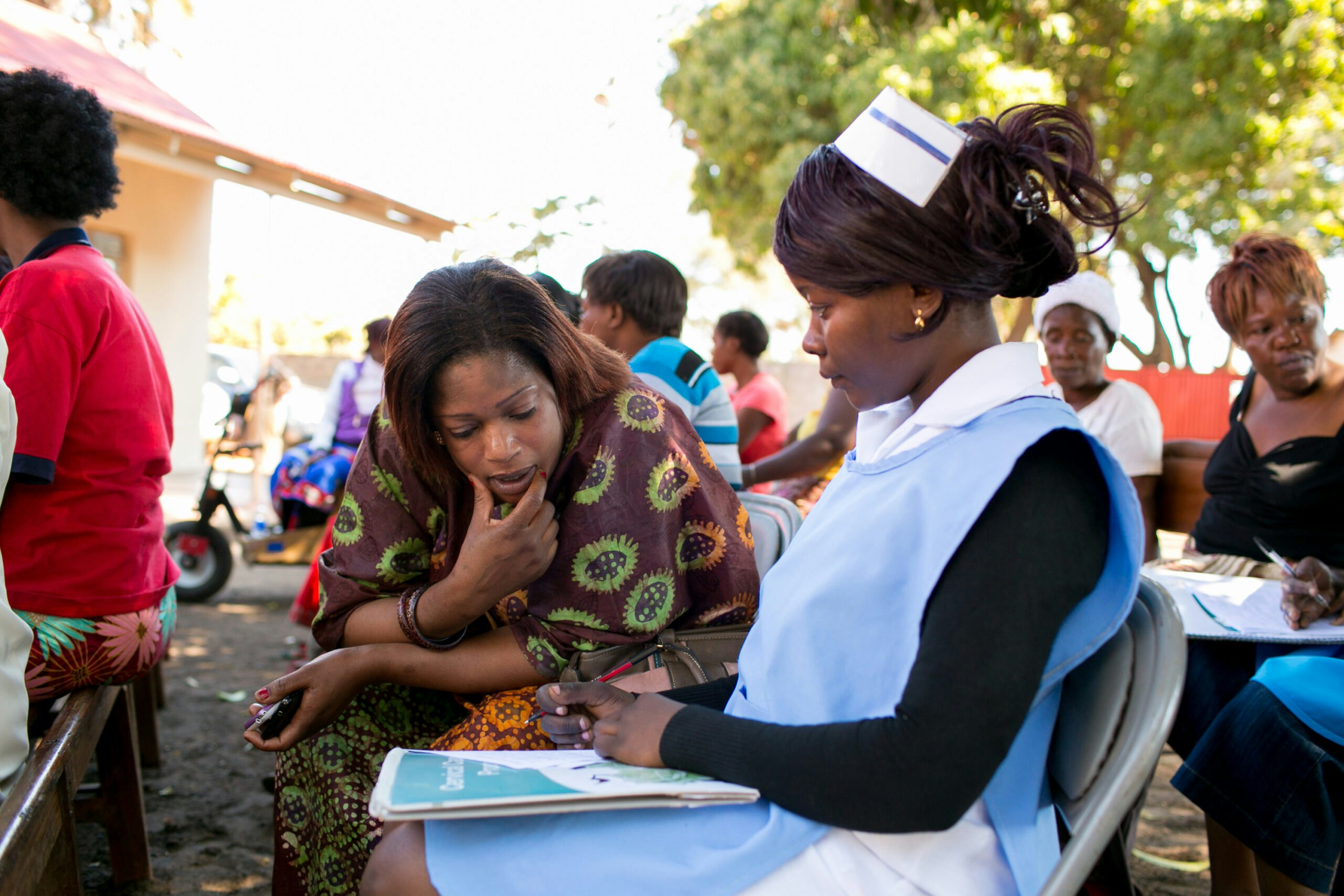
When President George W. Bush announced the President’s Emergency Plan for AIDS Relief (PEPFAR) in 2003, HIV/AIDS was devastating families and threatening stability across Africa. The U.S. chose to act, bringing together elected officials, government structures, subject-matter experts and faith communities across political lines with partners around the world to confront a crisis many believed was too difficult to overcome.
Today, U.S. leadership through PEPFAR has saved millions of lives, expanded access to HIV prevention and treatment, and helped partner countries build stronger health systems. As we approach World AIDS Day on Dec. 1, PEPFAR’s record – over 26 million lives saved – is a reminder of what sustained American leadership can achieve. Its success reflects a commitment to saving lives through science, rigorous accountability, and strong partnerships with countries and communities. Those lessons remain essential as the America First Global Health Strategy moves toward greater country ownership. Success will depend on preserving the expertise and relationships countries have built, setting realistic transitions, and ensuring U.S. investments continue to achieve outcomes to benefit people.
Bush Institute Insights
The George W. Bush Institute’s latest project, Imagining a world without PEPFAR, considers the impact on security, stability, economies, and global health had the U.S. chosen a different path. Through historical accounts, research, and reflections from leaders involved in the response, the project examines how PEPFAR changed the course of the HIV/AIDS pandemic and reshaped U.S. global health engagement.
The first chapter, “Paving the way for impact,” traces the years leading up to PEPFAR’s creation. While HIV/AIDS patients in wealthy countries could access lifesaving treatments, millions elsewhere faced HIV without those medicines. The chapter explores how a U.S. bipartisan commitment became a lasting partnership with governments, health workers, faith-based organizations, and communities, and how country ownership became central to the program’s approach.

“Ladies and gentlemen, seldom has history offered a greater opportunity to do so much for so many. We have confronted, and will continue to confront, HIV/AIDS in our own country. And to meet a severe and urgent crisis abroad, tonight I propose the Emergency Plan for AIDS Relief – a work of mercy beyond all current international efforts to help the people of Africa.… This nation can lead the world in sparing innocent people from a plague of nature.”
— President George W. Bush
2003 State of the Union address
America First Global Health Strategy Updates
As of Oct. 8, the U.S. has signed bilateral health agreements with 36 countries, bringing total announced health investment to $26.7 billion, including $10.3 billion in partner-country co-investment, according to KFF. KFF’s analysis shows that U.S. investment under these agreements is $8.1 billion below prior levels of U.S. commitments to the same countries. Tanzania faces the largest reduction at $1.18 billion, and 10 countries account for 69% of the total decrease. Namibia, South Africa, and Zimbabwe have not yet signed memorandums of understanding (MOUs). You can visit the tracker for details on each agreement’s financial commitments and program priorities.
In October, the U.S. Department of State Office of Inspector General (OIG) released an audit outlining how the department can strengthen its planning and coordination to manage USAID’s end of operations in supporting U.S. diplomatic posts overseas. The department has developed strategies to redistribute costs and transfer service responsibilities. Building on those efforts, the OIG calls for longer-term planning, clearer communication, and stronger internal controls to address an anticipated revenue shortfall of at least $237 million in fiscal year 2026 and future years.
Figure of the Week
49 out of 54
That’s how many African countries have increased health spending from 2025 to 2026 in response to declining international investment, according to preliminary estimates from the Institute for Health Metrics and Evaluation highlighted in Think Global Health. Even with these increases, significant gaps remain. Between 2024 and 2026, government health spending per person in low-income countries grew by an estimated average of 8% annually. However, total health spending per person, including external resources, fell by 3% annually over the same period. Several African leaders have responded through the Accra Reset, an initiative to give countries greater control over their health systems and resources. Its priorities include strengthening national health systems and local pharmaceutical manufacturing. Delivering on those ambitions will require sustained investment and the capacity to turn commitments into better care.
Ally Updates
On Oct. 28, the Global Fund to Fight AIDS, Tuberculosis, and Malaria announced that Dr. Mark Dybul will serve as its next Executive Director. Dr. Dybul was one of several architects of PEPFAR and served as U.S. Global AIDS Coordinator from 2006 to 2009, before leading the Global Fund from 2013 to 2017. His four-year term will begin in early 2027, with Peter Sands continuing in the role until then. The appointment comes as countries take on greater responsibility for their health programs. Board Vice-Chair Bience Gawanas emphasized Dr. Dybul’s experience in supporting that transition while continuing to serve the most vulnerable communities.
In the News
- Gavi, the Vaccine Alliance, and UNICEF announced an agreement to reduce the price of the RTS,S/AS01 malaria vaccine by approximately 40%, which would put the per-dose cost at €5.50. Sub-Saharan Africa has the greatest malaria burden with 95% of total deaths from the disease in 2024 concentrated in the region. Seventy-five percent of those deaths were among children under the age of five. The agreement is expected to potentially allow up to 1 million more children to receive the full four-dose vaccine series. The lower price, expected to take effect in early 2027 pending regulatory and manufacturing milestones, comes as demand for malaria vaccines continues to grow.
- The Center for Strategic and International Studies (CSIS) Global Health Policy Center called on Congress to reauthorize and modernize the Pandemic and All-Hazards Preparedness Act (PAHPA), 25 years after the 2001 anthrax attacks. First enacted in 2006 under the George W. Bush administration, the legislation established the Biomedical Advanced Research and Development Authority (BARDA) and strengthened federal preparedness and response capabilities, but its authorities expired in 2023. CSIS recommends clarifying federal agency responsibilities during biological emergencies, strengthening biosurveillance to detect emerging threats, and improving oversight of biological risks associated with artificial intelligence.
- The Millennium Challenge Corporation (MCC) recently outlined how the agency will assess countries for development partnership opportunities in fiscal year 2027. The notice opened a 30-day public comment period, which closes Nov. 9. Separately, the MCC Advisory Council convened Oct. 27 to discuss the agency’s private sector strategy and next steps for implementation, alongside updates on its portfolio countries. The discussions come as MCC continues to explore how private investment and development partnerships can support sustainable economic growth and poverty reduction.
- The New York Times reports that anticipated wealth from artificial intelligence companies with potential IPOs is prompting global health organizations to pursue new philanthropic funding opportunities. Entrepreneurs in the AI space could contribute billions of dollars in new support for disease prevention and treatment at a time when traditional foreign investment has declined. Potential areas of investment include contributions to the Global Fund, immunization, and treatments and prevention methods for the world’s deadliest diseases. Questions remain about the long-term reliability of these contributions and how new donors may shape funding priorities.
- Researchers are making the case for continued international health research by highlighting its benefits for Americans and populations abroad. An analysis published by Think Global Health argues that reciprocal innovation, in which researchers develop and adapt health solutions across borders, could help sustain support for global health research under the America First Global Health Strategy. The authors point to research on hypertension management in Ghana that informed similar approaches in the United States, where nurse-led care models have helped address challenges in access to treatment.
- South Africa could achieve HIV epidemic control more than a decade ahead of current projections by expanding access to lenacapavir, a twice-yearly injectable medication for HIV prevention, according to a new CSIS analysis. Since launching its rollout in June, the country has initiated nearly 79,000 people on the medication as of Oct. 15, with approximately 98% of new clients choosing the injection over daily prevention pills. Researchers estimate that expanding access to 1 million to 2 million people annually could help South Africa achieve epidemic control as early as 2039.
- The Ebola outbreak has spread beyond the Democratic Republic of the Congo (DRC) to four additional countries: Nigeria, Kenya, Uganda, and France, the Associated Press reports. Nigeria confirmed its first case in October, while Kenya has reported nine cases. France is the only country outside Africa to report a case, involving a doctor who returned from a humanitarian mission in the DRC in June and subsequently recovered. The outbreak, caused by the Bundibugyo strain of Ebola, has resulted in at least 9,500 infections and 4,600 deaths in the DRC. There is currently no approved vaccine or treatment specifically for the Bundibugyo strain, although vaccine trials are underway.
- As Sudan’s ongoing civil war and drought conditions deepen the country’s food security crisis, the United States and dozens of other countries are warning of a growing risk of famine and the need for urgent humanitarian action, Reuters reports. A United Nations-backed assessment has estimated that 5.1 million people in Sudan face severe hunger, while the conflict has displaced more than 14 million people. In a joint statement, the countries urged parties to the conflict to remove barriers to humanitarian assistance, protect aid workers, and allow access through cross-border routes. They also called for increased international funding and urged financial institutions to adapt their programs to address worsening food insecurity.