To celebrate America’s 250th birthday, I will publish a series of 12 essays exploring milestone events that shaped the American economy into what it is today – from the adoption of the Declaration of Independence to the Marshall Plan. I’ll pay particular attention to the country’s formative decades and tell the stories of ideas, policies, and innovations that helped build the world’s strongest economy.
Since early in America’s history, large-scale infrastructure projects have had transformative effects on the nation’s economy. Two momentous initiatives played especially significant roles in America’s emergence as the world’s leading economy during the 19th century: the Erie Canal and the first transcontinental railroad.
The Erie Canal – running east-west across New York state and completed in 1825 – connected the Hudson River and Lake Erie, setting in motion a historic surge of westward migration and commerce between the Atlantic Coast and the Great Lakes region. Likewise, the Union Pacific-Central Pacific rail link between the Midwest and San Francisco, which opened in 1869, connected the West Coast to the eastern half of the country and rounded out the world’s largest rail network. It made the American West the nation’s fastest-growing region for more than a century.
Both projects came into being thanks to bold, visionary leadership and innovative policies harnessing government plus private-sector capital and expertise. Both dramatically boosted economic growth in their time. And both showed how well-designed physical infrastructure projects can enduringly reshape American life at continental scale.
Transportation during America’s first half-century
America’s founders understood the benefits of connecting their young but far-flung nation with well-functioning roads and canals.
George Washington – who had seen more of the country than virtually any American political leader at the time through his service in the French and Indian War of 1754-1763, the American Revolution, and his peacetime work as a surveyor – tried for years to build support for a canal connecting the Potomac River to the Ohio River system across the Appalachians. As president, he also expressed interest in proposals by Robert Fulton, inventor of the steamboat, to construct a canal across Pennsylvania between Philadelphia and Pittsburgh. Thomas Jefferson’s treasury secretary, Albert Gallatin, wrote a report calling for federal leadership in building road and canal networks across the country.
But early infrastructure proposals mostly came to naught. One reason: Some powerful leaders, including Jefferson, James Madison, and their Southern allies, opposed federal involvement on constitutional grounds, arguing that most “internal improvements” should be the responsibility of state governments and private industry. Madison vetoed a bill to help fund a trans-New York canal on his last day as president.
Another obstacle was that many leaders thought large-scale projects like canals across New York or Pennsylvania would long remain technically infeasible. Jefferson said proposals for an Erie Canal amounted to “little more than madness.”
A third problem was the political question of who would pay for new infrastructure. Congress rejected Washington’s proposed Potomac canal partly on cost grounds. Even within New York, New York City merchants and politicians resisted Erie Canal proposals since they thought their city would end up bearing most of the costs but reap only a modest share of the benefits, as historian Carol Sheriff shows in her book The Artificial River: The Erie Canal and the Paradox of Progress, 1817-1862. Then as now, few people could grasp the power of exponential economic growth sustained over decades – and its capacity to pay for infrastructure projects many times over.
Most public works initiatives, consequently, were modest private-sector projects. Private players like the Philadelphia-Lancaster Turnpike company built a number of relatively short toll roads, some of which proved highly profitable. State governments chartered 30 private canal companies by 1790, but almost all the resulting canals spanned only a handful of miles.
For long-distance travel, early Americans had to rely on oceangoing vessels where possible and, for inland journeys, on infamously dreadful roads. Relatively little freight moved across the Appalachians, which reduced the appeal of migrating westward. When President-elect Andrew Jackson set off from his home in Nashville, Tennessee, for his inauguration in Washington in 1827, his trip took a month.
The Erie Canal
In 1810, the New York Legislature appointed a commission to develop plans for a trans-New York canal. The commission’s leading figure was DeWitt Clinton, mayor of New York City and soon to become the state’s governor. Clinton was a nephew of Jefferson’s vice president and a member of Jefferson’s Democratic-Republican Party, but he had a far more expansive vision for what would be technically and financially possible in his state than Jefferson did.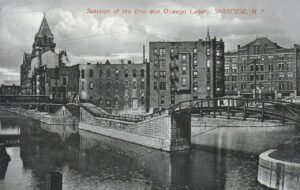
Not long after Madison vetoed federal funding for the commission’s plan, New York decided to move forward on its own. The 1817 legislation launching the project envisioned paying for construction through special taxes on canal beneficiaries, proceeds from state land sales along the canal’s route, and new bonds backed by canal tolls.
New York’s bond program was among America’s first use of “revenue bonds” – government bonds which pay interest and principal from the specific asset they’re funding rather than from the state’s general funds. The plan represented a bold bet by New York as well as its bond investors, since the canal was by far the largest infrastructure project in American history to date. Total lending under the bond program would come to about $200 million (in 2026 dollars), or almost three-quarters the size of the 1817 federal budget. New York would only be able to cover this debt if the canal sparked massive growth in long-distance commerce across the state.
The Erie Canal was a spectacular technical achievement. The 40-foot-wide canal ran 363 miles from Albany to Buffalo, twice as long as any other canal on Earth. It had to negotiate a 573-foot difference in water levels between Lake Erie and the Hudson River at Albany, requiring 83 locks. Its many engineering accomplishments included an aqueduct taking the canal over the Genesee River, which flows northward through Rochester, New York, into Lake Ontario.
The canal’s designers were mostly self-taught engineers, as America had no formal engineering schools in that era. A large share of workers who dug the canal were immigrants, mostly from Ireland, working in extremely dangerous conditions.
The canal reduced travel time between Albany and Buffalo by two-thirds and made it considerably more comfortable and predictable. The cost of shipping a ton of freight quickly fell about 90%.
The canal’s economic benefits far exceeded the predictions of even its most enthusiastic champions. The population of what was then considered America’s Northwest – Ohio, Michigan, Indiana, Illinois, and nearby territories – rose 10-fold from 1810 to 1840. Grain shipments from the Northwest to the coast soared more than 30-fold during the canal’s first 30 years in existence. The canal generated sufficient tolls to cover its debt service during its first 12 months of operation and to pay off the state’s canal bonds entirely by 1837.
Booming commerce powered the rise of upstate New York cities along the canal like Syracuse, Rochester, and Buffalo, as well as new commercial centers further west like Chicago, Cleveland, and Detroit. The canal also cemented the role of New York City as the nation’s dominant mercantile and financial center, as it became the leading port through which America’s interior traded with the rest of the eastern states and foreign countries. By 1860, 62% of U.S. exports passed through New York Harbor.
The Erie Canal had many other far-reaching effects. Fast-expanding markets promoted the emergence of much larger manufacturing facilities throughout what became the nation’s industrial heartland in the upper Midwest. Subsequent canal and railroad-building booms led to the establishment of America’s first engineering schools, starting with Rensselaer Polytechnic Institute in 1824. And the canal created new economic opportunities for people throughout the region. President James Garfield was among the many Americans born in modest circumstances who achieved significant upward mobility through work in canal-driven businesses.
The intercontinental railroad
Within a decade of the Erie Canal’s opening, the introduction of railroads made it possible to further drastically cut travel times and costs. America’s first significant commercial railroad, the Baltimore and Ohio, broke ground in 1828.
The nation’s total rail lines grew from 23 miles in 1830 to about 31,000 miles in 1860, with another 16,000 under construction on the eve of the Civil War. Congress pioneered the use of land grants to fund railroad construction starting in 1851 with the Illinois Central, which by the late 1850s became America’s longest rail line.
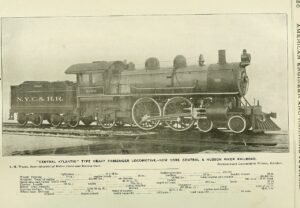 Enterprising industry leaders started to call for a railroad to the Pacific coast in the early 1830s, more than a decade before the United States seized California in the U.S.-Mexican War of 1846-1848. But while the private sector had mostly built out America’s rail network in the eastern half of the country without government subsidies, everyone understood that constructing a transcontinental line across more than a thousand miles of sparsely occupied territory plus the Rocky Mountains would require federal help. William T. Sherman, later a senior Union general in the Civil War but engaged in speculative railroad activities in California in the 1850s, said it would be “a work of giants” – and “Uncle Sam is the only giant I know” who could get it done.
Congress started planning for a Pacific railroad in the early 1850s, but two significant obstacles blocked progress throughout the decade. First, leaders couldn’t arrive at a consensus on how to pay the immense cost the project would entail. Second, they couldn’t agree on the first transcontinental railroad’s route.
Debates over the route became enmeshed in that decade’s fraught conflict over the expansion of slavery. Southern leaders like Mississippi’s Jefferson Davis – Secretary of War in Franklin Pierce’s Administration and later president of the Confederacy during the Civil War – were determined to spread their system of slavery-based plantation agriculture from Louisiana and Texas through the Southwest to southern California. They demanded a southern route running westward from New Orleans to promote this goal. Northerners wanted a route from Chicago to San Francisco.
Congress’s ferocious fight over the route led to the incendiary 1854 Kansas-Nebraska Act, which raised the possibility that the soon-to-be-formed state of Kansas would become a slave state and helped precipitate the Civil War. Even though the South’s plantation oligarchs got what they wanted with Kansas-Nebraska, they refused to yield on the route. President James Buchanan, a Pennsylvania Democrat but an ally of Southern leaders, rejected the idea of federal funding in an 1858 message to Congress, based both on cost considerations and Southern objections to a northern route. What finally made the Pacific railroad possible was the exit of all members of Congress from the 11 Southern states that seceded from the Union between December 1860 and June 1861.
Lincoln and the railroad
Another pivotal change was the rise of Abraham Lincoln, one of the most enthusiastic supporters of infrastructure expansion ever to serve as president. Lincoln had for years played a central role in U.S. railroad development as a private lawyer representing the Illinois Central. He was deeply knowledgeable about funding mechanisms and railroad engineering. On a speaking tour of western states in 1859, he went out of his way to visit Council Bluffs, Iowa, so that he could personally look across the Missouri River and inspect the area around Omaha, Nebraska, that many railroad experts considered the best jumping-off point for a route to the Pacific coast.
Western railroad executives devoted enormous effort to promoting Lincoln’s dark-horse campaign to become the Republican Party’s presidential nominee in 1860. Several attended his inauguration and visited him at the White House two weeks later. Despite the outbreak of war in April 1861, Lincoln forcefully advocated for a Pacific railroad act from the time he took office, “not only as a military necessity,” he said, “but as a means of holding the Pacific Coast to the Union,” according to Stephen Ambrose’s Nothing Like It in the World: The Men Who Built the Transcontinental Railroad, 1863-1869.
Congress passed the Pacific Railroad Act in July 1862, shortly after the Union Army’s hard-won victory in the Battle of Shiloh in Mississippi. The legislation empowered two new private-sector companies, the Union Pacific and the Central Pacific, to build the railroad. Lincoln personally approved the route from Chicago through Omaha, Nebraska, to San Francisco. The law incorporated two sources of funding: a federal grant to the developers of five 1-square-mile land sections alongside each mile of track and a federal credit guarantee for $1.6 billion of bonds to be issued by the two firms (in 2026 dollars).
The initial plan proved inadequate for what would be America’s largest 19th century infrastructure project. The railroad’s developers needed additional debt financing but were unable to raise it under the legislation’s provision that any other debt incurred in the project would be subordinated to the federal government’s claim – that is, if there wasn’t enough money to pay all creditors back, the developers would fully repay the Treasury before private lenders got anything. The two firms also raised capital through a large stock offering – in which the Mormon leader Brigham Young was notably the largest investor by far – but the offering allowed purchasers to buy in gradually and most wouldn’t commit much money until they saw how the project was going.
To address these issues, Lincoln persuaded Congress to pass new legislation in 1864 that doubled the size of the government’s land grants to the developers and allowed them to issue new bonds that would be senior to the government’s claim. The new money was sufficient to get the job done.
On May 10, 1869, the Union Pacific, running westward from Omaha, and the Central Pacific, running eastward from San Francisco, met in Promontory, Utah, and executives ceremonially drove the “last spike” completing the transcontinental rail link. Other firms built four additional transcontinental railroads to the north and south of the original route between 1883 and 1893. America’s total rail mileage quintupled from 1860 to 1890.
The economic effects of American rail expansion turned out to be even more dramatic than those of the Erie Canal. Travel time from New York to the West Coast declined from some four to six months – it took about the same time to travel by wagon train or by ship around South America’s Cape Horn – to 10 days in the 1870s and just four days by 1910. The cost of shipping freight fell more than 95%, according to John Steele Gordon’s An Empire of Wealth: The Epic History of American Economic Power. America’s population west of the Mississippi rose fourfold between 1870 and 1910. Annual freight shipments around the country, measured by ton-miles, rose 35-fold between 1865 and 1916.
Railroad expansion after the Civil War was not without significant problems. Contracts between the two railroad developers and the captive construction company they hired to do the work led to a massive corruption scandal during President Ulysses Grant’s Administration. The nation’s westward expansion had baleful consequences for Native American communities in the West. Private-sector firms built almost twice as much rail capacity as America needed by the 1880s, and almost half of all rail companies went bankrupt. But despite these issues, rail expansion transformed the United States.
Infrastructure and economic growth
America’s 19th century canals and railroads showed the dramatic effects that good physical infrastructure can have on migration and trade patterns. By expanding the market available to businesses, they helped the most innovative and efficient firms reach far larger scale, which in turn helped many of America’s leading firms to become dominant players in their industry worldwide by the early 20th century. Canals and railroads also opened up previously isolated and inaccessible regions for settlement, fueling the nation’s growth.
The same story would play out in the mid to late-20th century with the Interstate Highway Act and the expansion of federally funded water infrastructure in the West, as I described in a George W. Bush Institute-SMU Economic Growth Initiative essay last year.
America’s history confirms that well-designed infrastructure projects addressing clear economic needs have economic effects similar to the baseball field in the beloved 1989 film Field of Dreams: If you build it, they will come.