


Welcome back to the George W. Bush Institute’s education newsletter, where we examine how evidence-based literacy instruction, meaningful assessment, and accountability work together to improve outcomes across K-12 education.
Improving student outcomes requires more than good intentions; it demands a sustained focus on research, data, and strong implementation. We know what works. The challenge is putting it into practice, tracking progress, and continuously improving. This newsletter highlights how states and leaders are doing just that.
If you’re new to the Bush Institute, welcome. We are a nonpartisan organization dedicated to promoting freedom, opportunity, accountability, and compassion. If this newsletter was forwarded to you, we’d be glad to add you to our mailing list.
Thank you for reading.
Monthly snapshot
1.3 additional months of learning
Research from TNTP shows that when students use high-quality, well-designed reading materials, they gain more than one additional month of learning each year, and nearly two months for students who are struggling. This is because strong materials provide clear, step-by-step instruction and consistent practice, helping struggling students build missing foundational skills and all students accelerate their progress.
In The 74, Michelle Brown, Founder and CEO of CommonLit, argues that closing the literacy gap requires both protecting dedicated reading time and using it effectively with a strong, coherent curriculum. As she notes, if students spend 15,000 hours in school, it’s on us to ensure they’re getting out what they’re putting in by matching that time with high-quality, knowledge-rich, evidence-based instructional materials.
State spotlight
Georgia passes legislation to stregthen k-3 reading
Georgia lawmakers approved the Georgia Early Literacy Act of 2026 with near-unanimous support, taking a major step to align policy with the science of reading. The plan invests $70 million to place trained literacy coaches in every K-3 school, require high-quality instructional materials, and strengthen screening, dyslexia support, and early intervention.
This push comes after a hard truth: While graduation rates have risen, literacy skills have lagged. As State Sen. Billy Hickman said, “The true answer was our children could not read.”
Bush Institute insights
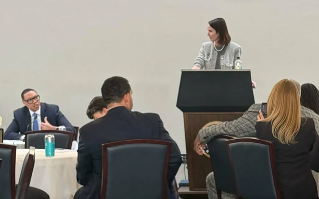
- The National Parents Union and the George W. Bush Institute hosted a bipartisan Capitol Hill briefing on science of reading reforms in partnership with Senator Bill Cassidy’s office on March 26. The panel featured leaders from Tennessee, Iowa, Georgia, Mississippi, and Washington, D.C. They emphasized that improving student reading outcomes requires a coordinated approach: high-quality instructional materials, strong teacher support, early intervention, and ongoing progress monitoring, along with clear expectations for schools and support for families. As Rep. Josh Harder noted, states that have embraced the science of reading are seeing strong results and now is the time to scale those efforts nationally.
- The Bush Institute hosted its annual Forum on Leadership on April 16. This year’s theme, The Heart of America, celebrated the 250th anniversary of our nation with conversations around free speech and the press, our national parks, and pivotal moments of American history. David M. Rubenstein of the Carlyle Group received the 2026 George W. Bush Medal for Distinguished Leadership.
Science of reading
- Dyslexia and the science of reading: The New Yorker staff writer David Owen joined Sold a Story for a conversation about his December 2025 article “Dyslexia and the Reading Wars” and how evidence-based reading instruction can dramatically change outcomes for students with dyslexia, but systemic barriers and entrenched beliefs still slow that progress.
- Doubling down on implementation: Ohio Governor Mike DeWine is focused on sustaining the success of the state’s science of reading reforms by creating regional instructional implementation teams to review schools’ reading practices and by adding 50 more reading coaches to support teachers. These steps aim to ensure high-quality curricula, professional development, and evidence-based practices are consistently applied in classrooms.
- Policy adoption alone is not enough: Kymyona Burk, senior policy fellow at ExcelinEd and former state literacy director at the Mississippi Department of Education, joined an episode of Harvard EdCast where she discussed the importance of the sustained effort and disciplined implementation behind Mississippi’s reading gains. The state aligned leadership, funding, and classroom practice around evidence-based instruction, with clear expectations about what was required versus optional. As more states adopt science-of-reading reforms, Burk emphasized that Mississippi’s success came from an investment in teacher knowledge, ongoing coaching, and consistent implementation for more than a decade.
- Reading reform is a marathon: As former Mississippi First founder Rachel Canter wrote in an op-ed for The Atlantic, “We’ve instead started calling our success the `Mississippi marathon.’ A marathon is always 26.2 miles, no matter when or where it’s held. There are no shortcuts. Finishing is a human marvel, but not miraculous. Mississippi took every step, no matter how exhausting, to fix education. Other states will have to do the same.” Canter also discussed how gains were driven by high expectations and strong accountability measures such as clear standards, A-F school grading, regular screening, and a third grade reading requirement with limited exemptions.
- Focus on older students: At least 40% of middle school students struggle with advanced decoding – reading multisyllabic words – which is critical for comprehension. In an interview with Education Week, Rebecca Kockler, executive director of the Advanced Education Research and Development Fund, noted that students hit a “decoding threshold” in upper elementary grades, but schools often stop teaching these skills too soon. Research shows many students in grades 3-8 still need explicit decoding instruction as texts become more complex. Kockler recommends screening older students to identify needs, integrating advanced decoding with vocabulary and morphology, and using technology to tailor support.
- D.C.’s investment in teacher training is paying off: A federally funded literacy pilot that focused on structured literacy, regular data review, and strong instruction in phonics, fluency, and comprehension led to major gains. Students showed 54% more growth than their peers and reduced the achievement gap by a third. The results show that students do best when teachers have strong training, high-quality materials, and time to use data effectively.
Measurement matters
- In Texas, alignment drives results: Last month, Anne Wicks, Don Evans Managing Director of Opportunity and Democracy at the Bush Institute, moderated a panel at ASU-GSV titled, “Clear Eyes, Full Hearts, Can’t Lose… Texas Education Policy” that highlighted how Texas is seeing real gains in student outcomes when strong state policies, transparent data, and incentive systems align.
- Bridging the gap between standards and graduation rates: Higher graduation rates are worth celebrating only if they reflect real learning gains, The Washington Post editorial board writes. In Boston, just 40% of students in the Class of 2025 met math expectations on the state’s MCAS exam, and fewer than half met standards in English, even as graduation rates reached a record high. Boston is emblematic of a growing trend across the country where graduation rates are rising even as standardized test scores are dropping, signaling a disconnect between diplomas and true college and career readiness.
- Grades versus assessments – are students truly on track? A new study cited in The 74 finds that parents often miss early warning signs when students fall behind. Families tend to rely on grades, even when they conflict with test scores. While grades can reflect effort and progress, they can also hide gaps in knowledge. Standardized assessments provide a clearer picture of whether students are on track.


