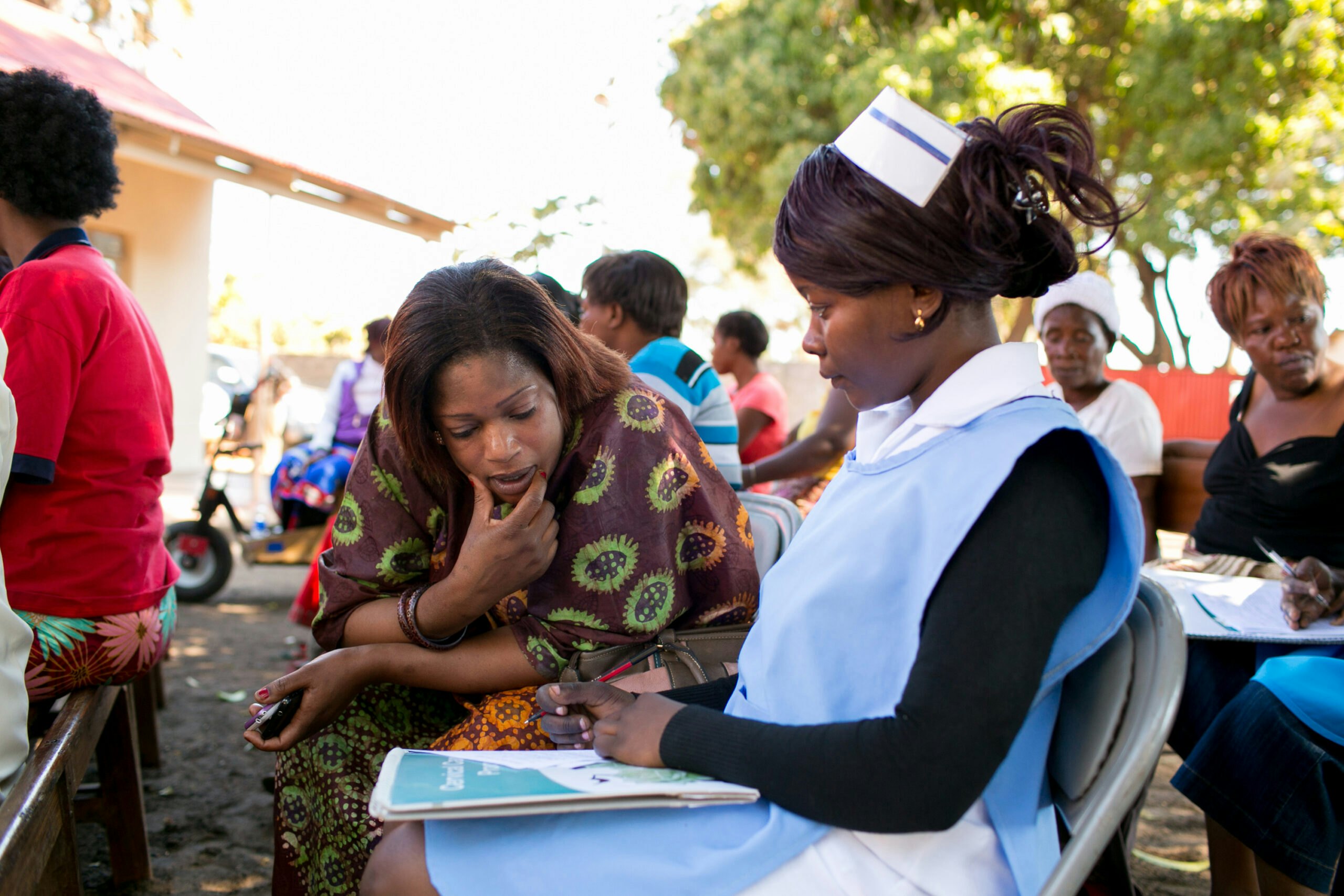
May 27 marks the 23rd anniversary of the President’s Emergency Plan for AIDS Relief (PEPFAR), one of the most successful investments in American history. Since 2003, PEPFAR has saved more than 26 million lives, including nearly 8 million babies born HIV-free. It has also strengthened health systems that later responded to threats like Ebola and COVID-19, while supporting stability and economic growth in countries across Africa.
Today, PEPFAR is at a turning point as countries transition toward greater ownership of their HIV responses. As I write in my latest piece outlined below, this next chapter will require the same principles that defined PEPFAR from the beginning: compassion, accountability, resilience, and optimism. Sustaining progress will depend on strong partnerships, continued oversight, and ensuring vulnerable countries and communities are not left behind.
Bush Institute Insights
PEPFAR looks very different today than it did 23 years ago. Innovations in testing, treatment, and prevention have accelerated progress to end HIV/AIDS. At the same time, stronger coordination with local civil society organizations and partner governments has helped ensure programs respond to the needs of communities. The result is a generation of young people born HIV-free who are now contributing to some of the world’s fastest-growing economies.
In my latest article, “Compassion, resilience, optimism: Celebrating PEPFAR’s 23rd anniversary,” I reflect on what comes next as the program transitions toward greater country ownership by 2030 under the America First Global Health Strategy. Bilateral health agreements can strengthen accountability and long-term sustainability, but only if the U.S. continues to play an active oversight role. Some countries facing conflict, insurgency, or authoritarian rule may require a more gradual transition and continued technical support from implementing partners to sustain lifesaving HIV services. Policymakers and implementers must ensure that partner governments track investments, direct resources to vulnerable populations, and measure results.
As Americans celebrate our nation’s 250th anniversary this year, we should also recognize the lasting impact of U.S. investments in global health, peace, and prosperity. More than two decades after launching PEPFAR, President George W. Bush’s words remain just as relevant today: “America makes this commitment for a clear reason, directly rooted in our founding. We believe in the value and dignity of every human life.
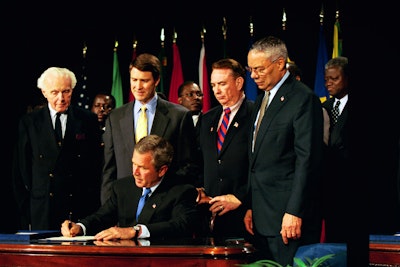
Figure of the Week
$5.53 billion for PEPFAR and the Global Fund
The Fiscal Year 2027 House National Security, Department of State, and Related Programs (NSRP) appropriations bill provides $5.53 billion for PEPFAR and the Global Fund, including $4.28 billion for bilateral HIV programs under PEPFAR, which according to KFF, represents a $350 million, or 8%, decrease compared to FY 2026.
KFF also released a new resource outlining congressional reporting requirements tied to PEPFAR since the program’s launch in 2003. Ongoing requirements include annual reporting on U.S. global HIV efforts, women and girls programming, partnership frameworks, and progress toward country-led transitions under the America First Global Health Strategy. Newer reporting requirements tied to the FY2026 appropriations package also require the State Department to submit a strategy to transition PEPFAR to country ownership, bilateral health agreement details, and benchmarks for country ownership and co-investment by this month.
Ally Updates
More than 200 civil society leaders, people living with HIV, and global health partners gathered at the United Nations ahead of the 2026 High-Level Meeting on HIV/AIDS to urge stronger support for community-led services. Speakers emphasized that ending AIDS as a public health threat by 2030 remains possible, but only if countries sustain investments, strengthen domestic financing, and institutionalize support for communities most affected by HIV. Botswana Ambassador Charles Masole highlighted that progress against HIV has always depended on partnerships between governments and civil society, while UNAIDS Executive Director Winnie Byanyima called on leaders to “do what is necessary in the next five years.”
In the News
- Friends of the Global Fight Against AIDS, Tuberculosis, and Malaria released an investment case urging Congress to appropriate $1.533 billion for the Global Fund in fiscal year 2027. Since 2002, the Global Fund partnership has helped save 70 million lives and reduce the combined death rate from the three diseases by 63%. The report notes that 52 disease programs across 38 countries have already transitioned from Global Fund support, with additional country-led transitions underway.
- Emily Bass, author of To End a Plague: America’s Fight to Defeat AIDS in Africa, argued that the State Department’s new model for CDC technical assistance could dramatically reduce the CDC’s footprint in partner countries. The piece also includes what appears to be guidance documents for U.S. government officials implementing bilateral health agreements in partner countries.
- In an article for STAT released on May 26, former directors or acting directors of the Centers for Disease Control and Prevention (CDC) urged the State Department, partner countries, and members of the U.S. Congress to work together to foster a stable transition of PEPFAR to country ownership. This includes emphasizing the strength of interagency partners – like the technical expertise at CDC and the diplomatic presence of the State Department – to achieve sustainable results.
- A KFF analysis tracking PEPFAR data from FY 2021 Q1 to FY 2025 Q4 found that while treatment continuity remained stable, with 20.3 million people on antiretroviral therapy, prevention and testing indicators declined sharply. When comparing FY 2025 Q4 data to the previous year, new PrEP enrollments fell by 41%, DREAMS participation dropped 86%, and HIV testing declined 17%.
- The Africa Centres for Disease Control and Prevention (Africa CDC) confirmed a new Ebola outbreak in eastern Congo’s remote Ituri province, where 246 suspected cases and 65 deaths have already been recorded as of May 15, AP News reports. Health officials are racing to identify the virus strain as concerns grow over cross-border spread into Uganda and South Sudan. Congo has previously contained more than a dozen Ebola outbreaks, but weak infrastructure and ongoing conflict in Uganda and South Sudan could complicate response efforts.
- Think Global Health highlights how Indonesia is positioning itself as a global leader in cervical cancer elimination through nationwide Human papillomavirus (HPV) vaccination, expanded HPV-DNA screening, and increased treatment access across its 17,500 islands. Each year, cervical cancer kills more than 20,000 women in Indonesia, where nearly 70% of cases are detected at advanced stages. The country’s National Cervical Cancer Elimination Plan aims to fully vaccinate 90% of girls and boys by age 15, screen 75% of women ages 30-69, and ensure 90% of women diagnosed receive treatment by 2030.
- The U.S. Department of State recently announced the launch of a new humanitarian assistance hub in South Florida, underscoring its commitment to disaster preparedness and humanitarian response in the Western Hemisphere. The initiative will better coordinate pre-positioned emergency relief supplies across the region and embed disaster advisors at U.S. Southern Command to strengthen rapid response capabilities. Under the America First Foreign Assistance framework, the Administration aims to dedicate 20% of total U.S. foreign assistance resources to the Western Hemisphere.