The George W. Bush Institute’s Veteran Wellness Alliance is a coalition of veteran peer-to-peer networks and best-in-class mental and brain health care providers who connect veterans, service members, their families, caretakers, and survivors to high-quality care for their invisible wounds.
Q&A with Lindy Carbone, Licensed Clinical Social Worker, Board Certified Diplomate, and Director of Social Work and Social Services Manager at Emory Healthcare Veterans Program
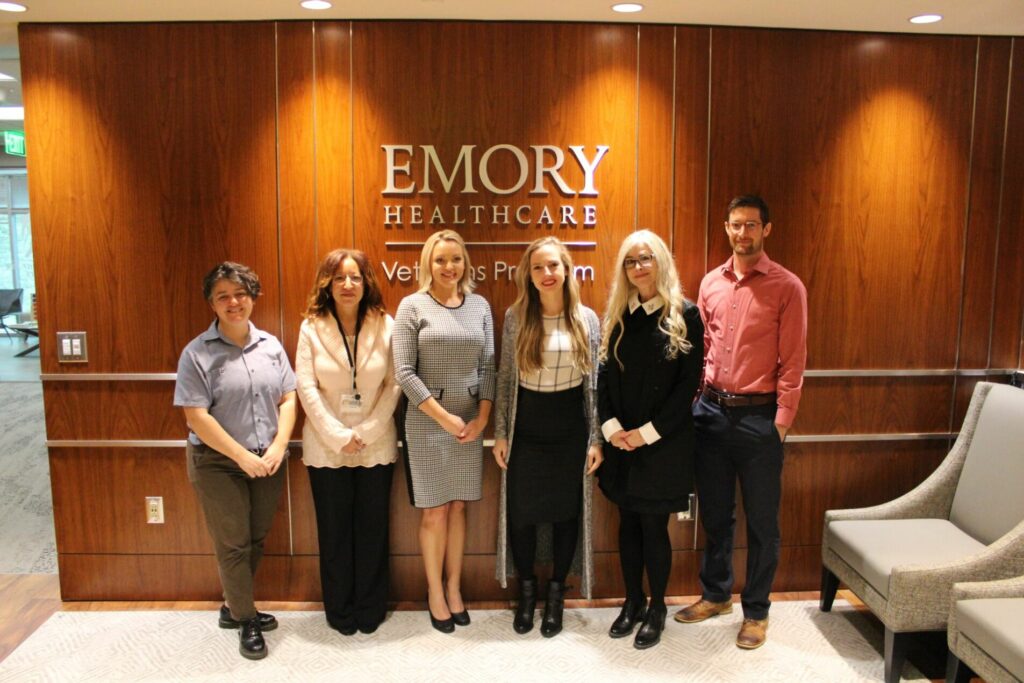
Describe Emory Healthcare Veterans Program.
The Emory Healthcare Veterans Program provides confidential mental health care for post-9/11 veterans and service members affected by invisible wounds post-traumatic stress disorder, traumatic brain injury, military sexual trauma, anxiety, and depression. Every aspect of treatment is fully covered, including care, travel, lodging, and meals, so veterans can fully engage in treatment.
Treatment is available to all eligible veterans and service members who were active in the military at least one day after Sept. 11, 2001 – regardless of location, discharge status, deployment history, or length of service.
Our program, which is part of the Warrior Care Network®, recognizes the stress of military service and the challenges of returning to civilian life. We’re experienced in working with veterans and service members, and many of us have served as well.
Can you describe the role case managers play in supporting veterans throughout their treatment journey with Emory Healthcare Veterans Program?
While the Emory Healthcare Veterans Program is recognized for state-of-the-art care, if you ask the veterans who have graduated from our program what stood out the most for them, I
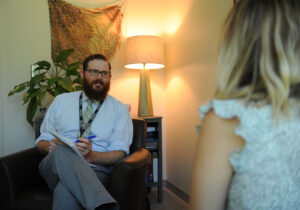
believe they would say that it was our kindness. We consider it a privilege to serve the military community, and that dedication is felt in every interaction with our case management team.
Our case management team consists entirely of licensed clinical social workers (LCSWs) who combine years of mental health expertise with a deep passion for serving veterans. As the primary point of contact, a dedicated case manager reaches out shortly after acceptance to build a “warm connection,” ensuring an apprehensive veteran feels comfortable, engaged, and supported from day one.
From that first phone call, throughout the treatment journey and after discharge, our team provides unwavering compassion and direct access. We focus on building trust, providing compassionate care, and developing a tailored, comprehensive aftercare plan centered in the veteran’s home community. With team members having served at Emory Healthcare Veterans Program for 4 to nearly 10 years, I am incredibly proud of this highly experienced, compassionate group of experts dedicated to our military population.
Watch social worker Tiffany Wilcox share how our team brings this approach to life and supports each veteran throughout their journey.
What is the overall mission that guides the Emory Healthcare Veterans Program’s approach to caring for veterans?
Our mission is to provide life-changing, evidence-based mental health care to post-9/11 veterans and service members and to do so in a way that is accessible, compassionate, and effective.
We’re focused on treating invisible wounds such as PTSD, depression, and anxiety through high-quality care that leads to real, lasting outcomes. Just as important, we’re committed to restoring hope and helping veterans live the life they envision.
What can a veteran coming into the program at the Emory Healthcare Veterans Program expect as they move through the process?
From the very first phone call to graduation and beyond, the Emory Healthcare Veterans Program’s Accelerated Brain Health Program is designed to meet veterans with the compassion and respect they deserve. The journey begins with a courageous call to schedule an assessment with one of our clinical psychologists. Once accepted, our social work team promptly reaches out to coordinate participation, ensuring every detail is handled with care.
Over the course of the two-week program, veterans participate in therapy, wellness services, and family support designed to drive meaningful, lasting change. Throughout the process, each veteran is supported by a dedicated case manager who helps guide them every step of the way, providing consistency, advocacy, and a seamless experience.
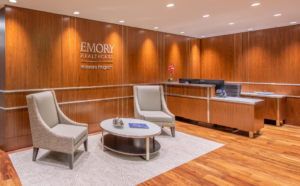
One recent graduate shared, “I was struggling, but when I called the Emory Healthcare Veterans Program, the woman who answered was incredibly kind. Her support is why I’m graduating today.” That same level of compassion carries through every interaction, because this work is deeply personal and truly lifesaving.
To better understand what that journey looks and feels like, veterans can hear directly from those who have been through the program. Watch their stories and see what’s possible when you take the first step toward healing.
How has working in this space changed your understanding of the challenges veterans face during treatment and transition?
Veterans and service members face unique challenges, including a pervasive stigma around seeking mental health care. The historical “toughness” culture within the military can make many suffer in silence out of fear or shame. However, the reality is that mental health conditions are highly treatable, and evidence-based care allows program participants to heal their invisible wounds and frequently restore relationships and return to successful, active careers.
Witnessing a veteran’s journey from darkness to light after just two weeks of treatment is profoundly moving. I have been in the field of social work for over 25 years; serving the military community as a licensed clinical social worker has truly been the pinnacle of my career.
Looking forward, what gives you the most hope for the future of veteran support and wellness, especially for the post-9/11 generation of veterans?
Moving forward, the landscape for veteran mental health care and wellness is bright. Several developments provide significant hope for the future. First, the growing emphasis on evidence-based care ensures that our program graduates and all military members transitioning from active duty to civilian life have access to competent, trained professionals in their home community for continuity of care. Second, promising research into supervised psychedelic-assisted therapy is potentially a game changer, opening new avenues for treatment-resistant conditions, offering help to veterans who need it most.
Finally, the stigma surrounding mental health treatment is fading, driven by veteran peer support and active-duty clinicians within the military community. Notably, our work with the special operations community demonstrates that proactive mental health treatment, treating it with the same urgency as a physical injury, allows service members and veterans to recover, reintegrate, and return to their lives with purpose.