


Tina Atherall brings a lifetime of experience to her work supporting veterans and their families.
Born into a military family, she married a Marine and raised her children within the military system. After 9/11, she was part of a community that looked at the unique needs of service members, veterans, and family members that the government wasn’t yet equipped to address. She became a leader in advocating for military spouses and then a social worker, ultimately earning her doctorate in the field.
Today, she is the CEO of the nonprofit Psych Armor, a leading educational technology organization that supports the military-connected community by teaching and advocating for critical support for those who have served and their families.
“There’s a lot of cultural understanding that’s different within our military community, and it really does help to engage and even build better programs if you understand them a little bit better,” she said.
That’s why she works hard to promote military cultural competency, something that the George W. Bush Institute has highlighted through its Veterans and Military Families work, and the Stand-To Veteran Leadership Program, of which Atherall is an alum.
“Less than 12% of healthcare providers have any type of military cultural awareness training at all,” Atherall said in an interview, citing data from the George W. Bush Institute and the RAND Corporation. “It is our job to understand the individuals that we’re serving.”
Atherall said her time in the Veteran Leadership Program (VLP) connected her to a network of people serving the veteran-facing community and helped her determine where she sits at the intersection of these conversations and how she can best make an impact. While in VLP, her personal leadership project looked at how the veteran-serving community can move beyond training about veteran issues to making sure it’s truly ready to support veterans and are “Veteran Ready,” as she calls it.
“One of the top three reasons why veterans say they do not stay in care is they feel as though their providers don’t understand them,” she said, citing the Bush Institute-RAND data.
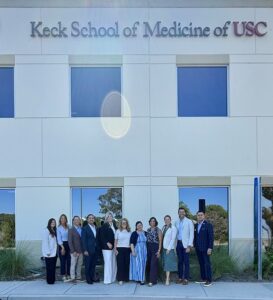 Atherall is also leading a working group of Veteran Leadership Program alumni on building the behavioral health workforce that serves the military-connected community. Members of the working group meet monthly to discuss how to tap into the vast expertise of the alumni network to drive positive change. This topical working group is one of many through which the Veteran Leadership Program engages its nearly 300 alumni around various issue areas where they can act collaboratively and continue their impact together.
Veterans, spouses, and military children all have different experiences, so it’s vital to understand where the gaps in reaching each of them are if one wants to connect with members of the military community, she said.
“If you’re a teacher, if you know you have a military child in the classroom, you’ll probably know they moved a lot and certain things that might exhibit in the classroom might be just general behavior things or may be emotional distressors, and there’s probably a different story around it than your civilian children,” she said. “Knowing what to do and how to ask questions a little bit differently is really important.”
She applauded the increased attention that the country has given to supporting military families as well as veterans and active service members over the past few years.
“There was a swell to start to bring families into that conversation,” she said. “The VA, as they were starting to deal with more and more post-9/11 veterans, developed the caregiver program. This resulted in us seeing the onsets of systems changes to help with family members being integrated into the care system.”
Suicide risks by veterans are higher if the families don’t become involved in care, she said. And there are other concerns: Service members won’t stay in the military if their spouse can’t obtain employment where the family is based or if the spouse is under pressure as a caregiver. And veterans can be tremendous assets for communities in terms of civic activity and community engagement, she noted.
“If you are an active duty family member, are you going to be able to live there?” Atherall said. “Are there jobs? Are there access points for health and well-being? Tackling them from a positive perspective is where you want to be.”


