
Whose ideals will shape the future?
An Afghan explains why American leadership matters.
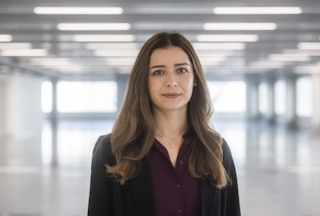
 Mrs. Laura Bush and Onaba Payab at the Bush Institute's Global Women's Network event. (Photo by Grant Miller)
We are living through an era in which wars are reshaping borders, authoritarian leaders are growing bolder, democratic backsliding is accelerating, and women’s rights are being negotiated between global powers. The key question today is not whether ideals still matter, but whose ideals will shape the future in ways that genuinely improve people’s lives. Around the world, people are watching to see whether democracy can still defend itself and whether powerful nations are still willing to stand by the values they claim to represent. At moments like this, the role of the United States matters deeply – not because it is perfect, but because it retains unique leverage to effect change around the world.
Many people outside the United States think of America less as a place on a map and more through its impact on their everyday lives. Consider my example. I can remember being a refugee kid growing up in the 2000s, sitting on the floor of our home in Quetta, Pakistan, during a (daily) power outage, listening to my father’s small Japanese radio running on weak AAA batteries. He would usually tune it to the Voice of America Pashto, which was often our only source of news. On that radio, I heard people debating openly, sometimes angrily, about government failures, elections, and rights. I did not grasp every detail, but I understood something powerful: the people on the broadcast were being allowed to question authority without fear. That struck me deeply. In my world, especially as a girl, staying silent was often safer than speaking out, and expressing one’s inner thoughts was considered an act of disobedience. Yet thanks to those U.S.-sponsored radio programs, I realized that somewhere in the world, challenging power was seen as normal, even expected. Long before I imagined that I’d ever get a chance to study in the United States myself, America entered my life as a place where freedom of speech was a right, not a privilege. Coming from a country like Afghanistan, where women’s choices were restricted, that idea felt revolutionary.
The notion became real for me when I joined the American University of Afghanistan (AUAF). After opening its door in 2006 with U.S. support and the advocacy of former first lady Laura Bush, the university offered space for independent thinking, something quite rare in a war-torn country. While the curriculum followed U.S. academic standards, its true impact went beyond textbooks. Professors did not ask us to memorize answers but to question assumptions. Debate, disagreement, and curiosity were encouraged. In classrooms filled with students who had grown up amid conflict, I learned to reason, to speak with confidence, and to trust my own voice. For the first time, education was not about obedience but about exploring possibilities. The confidence I learned then has stayed with me to this day.
Experiences like mine help explain why U.S. leadership has mattered to the world for so long. Through diplomacy, education, foreign assistance, and cultural exchange, the United States has helped rebuild institutions and human capacity in places where both have been deliberately destroyed. These efforts were not acts of charity, but partnerships – investments in stability and dignity.
I witnessed this process again when I got involved in the Fulbright Foreign Student Program in 2016. As a Fulbright scholar, I became part of a global network that enables students and professionals from more than 160 countries to study and conduct research in the United States. By offering Fulbright scholarships to Afghan students, the U.S. Embassy in Kabul quietly transformed the country from within. As the program progressed, Afghanistan no longer had to rely only on foreign advisors. Educated, skilled, and confident Afghan men and women began serving in key roles across government and civil society. Knowledge became local. Leadership became Afghan. This shift was among the most sustainable forms of progress the country experienced.
Despite these efforts, inconsistency in defending democracy created a vacuum that was eventually filled by chaos. I witnessed this firsthand in August 2021. The same country that championed women’s rights in Afghanistan after 2001 ultimately negotiated with forces that erased women from public life. The same nation that promoted democracy grew exhausted with the cost of defending it. When the United States withdrew from Afghanistan, the loss felt not only strategic, but moral. It sent a painful message that commitments rooted in values can be reversed when they become inconvenient.
And yet America remains vitally important today.
The United States has fallen short many times – all countries do. What makes the United States special is that it has built systems that allow its failures to be challenged. Its democracy has endured because of its Constitution, its founding principles, and its culture of civic engagement. Living in the United States, as I did from 2016 to 2018, I saw people protest, organize, and demand accountability. Such friction is not a weakness in the U.S. system, but the reason American democracy has survived when so many others have not.
The United States must now rethink how it will lead in the years ahead. Military power alone cannot defend democracy. The world does not need America to be flawless, but it needs the United States to be principled, consistent, and courageous enough to align its power with its ideals. Women like me, and millions of other hopeful people around the globe, share a desire to see the United States recommit to supporting democratic institutions, women’s rights, and education beyond its borders as a deliberate strategy. The credibility of American leadership and the future of freedom depend on it.
The Catalyst believes that ideas matter. We aim to stimulate debate on the most important issues of the day, featuring a range of arguments that are constructive, high-minded, and share our core values of freedom, opportunity, accountability, and compassion. To that end, we seek out ideas that may challenge us, and the authors’ views presented here are their own; The Catalyst does not endorse any particular policy, politician, or party.